
Geographic Distribution and Potential Conservation Strategies for the Genus Japonia in Sarawak, Malaysia
This study explores the diversity and distribution of Japonia species, a genus of terrestrial gastropods in Sarawak, Malaysia. Due to their limited distribution and specific habitat needs, Japonia species are highly sensitive to ecological changes. The study aimed to identify these diversity and dis...
Saved in:
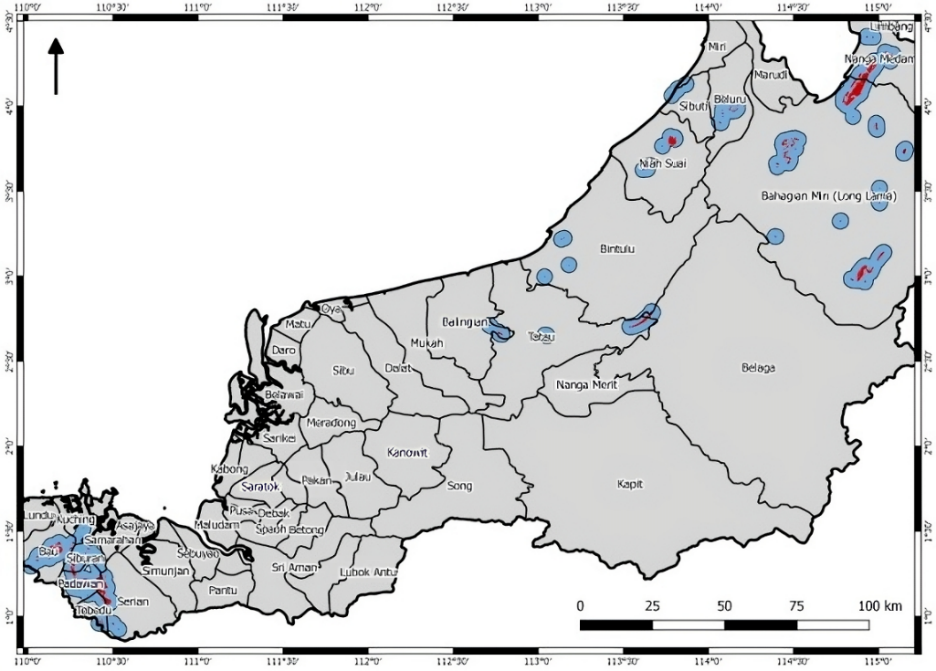
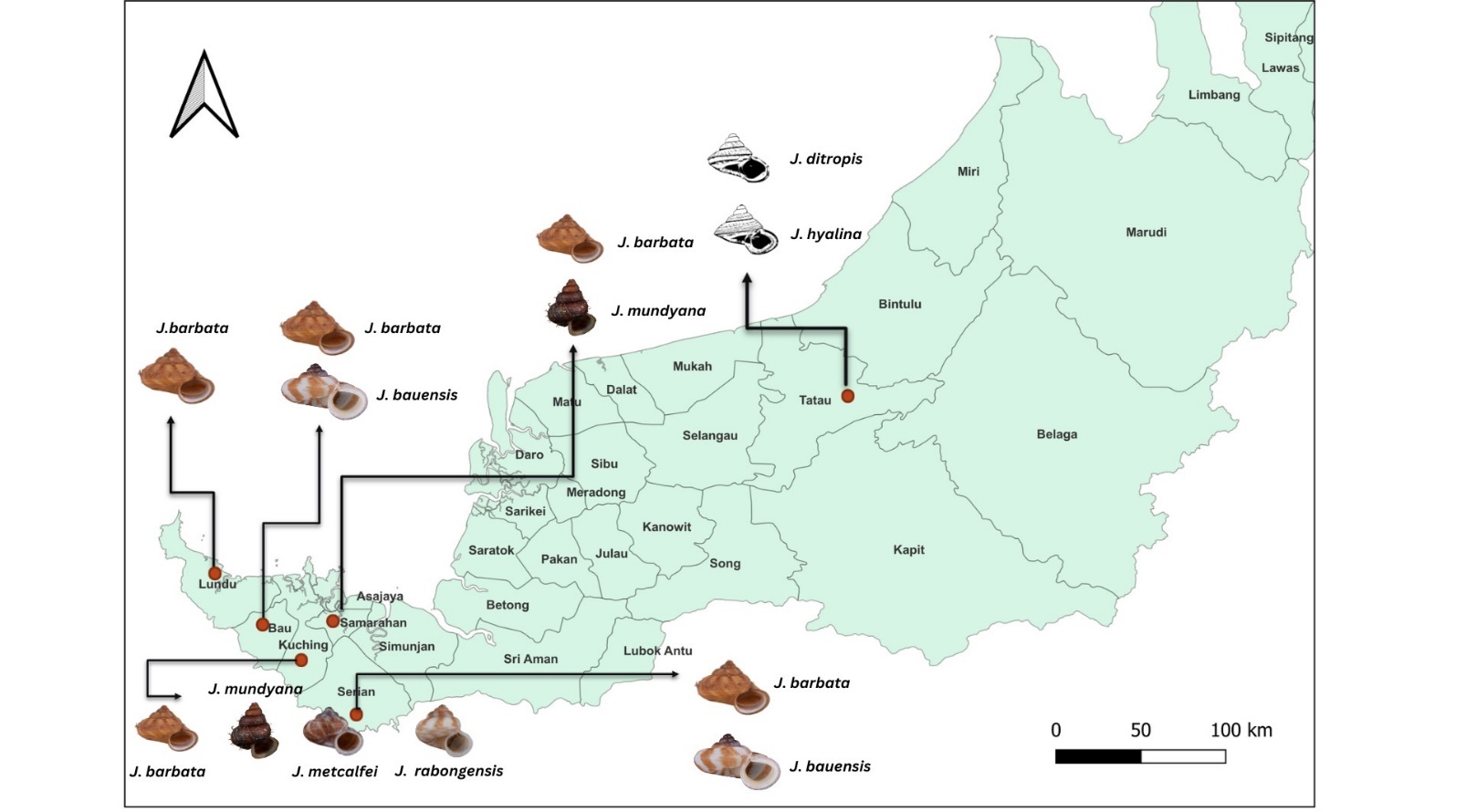
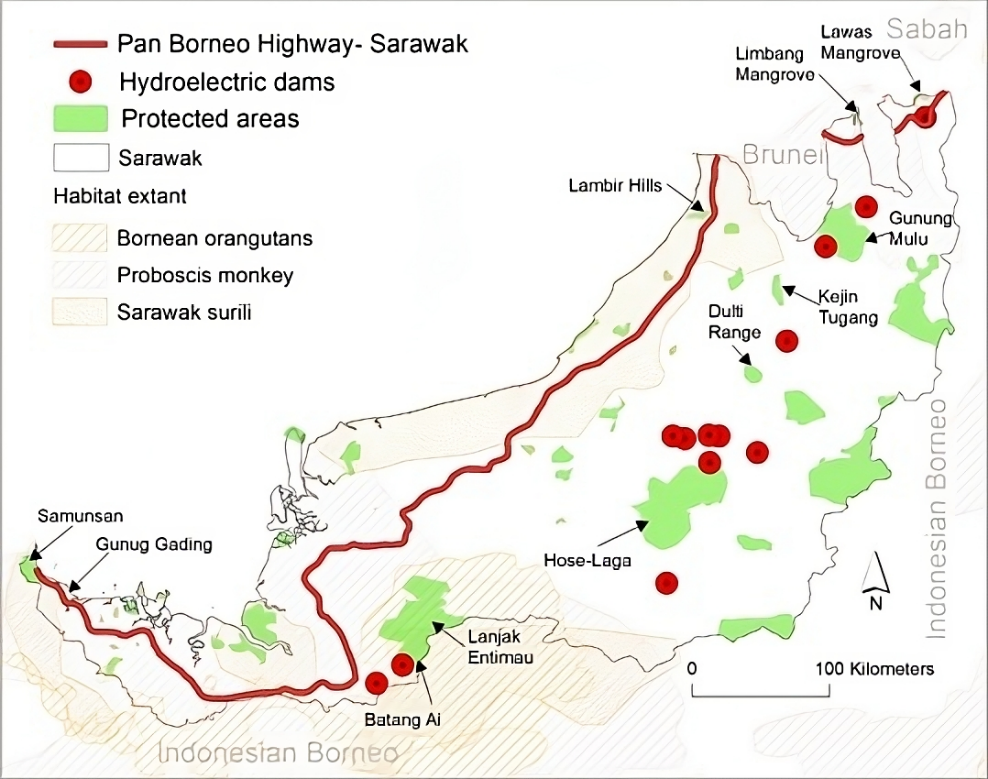

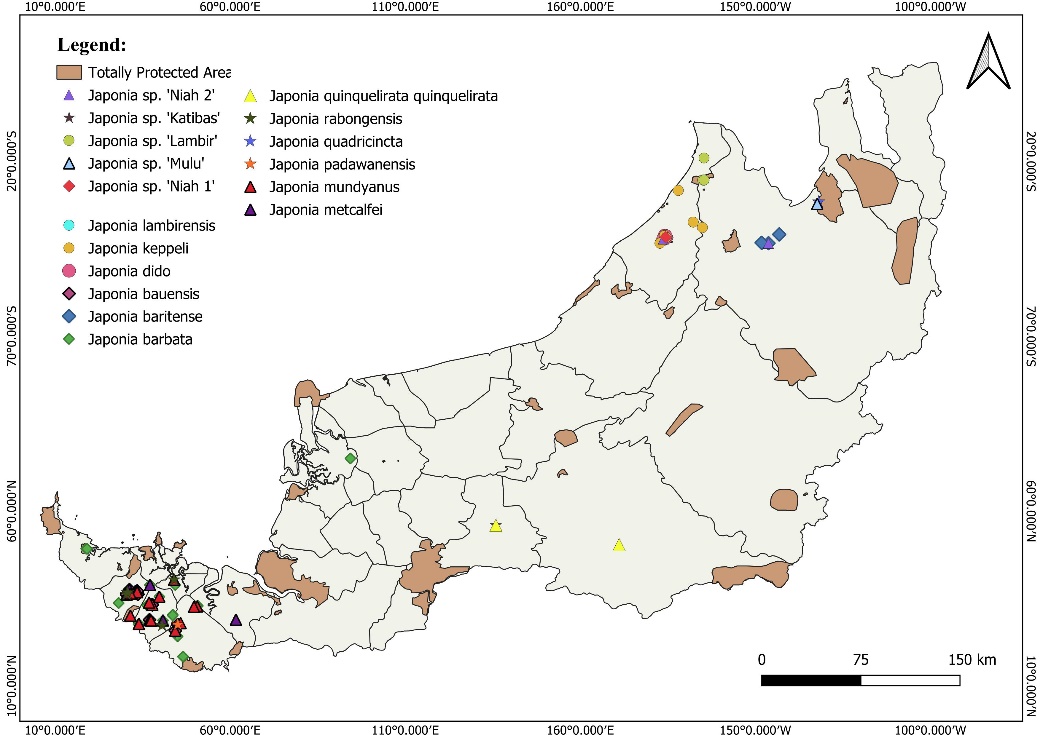
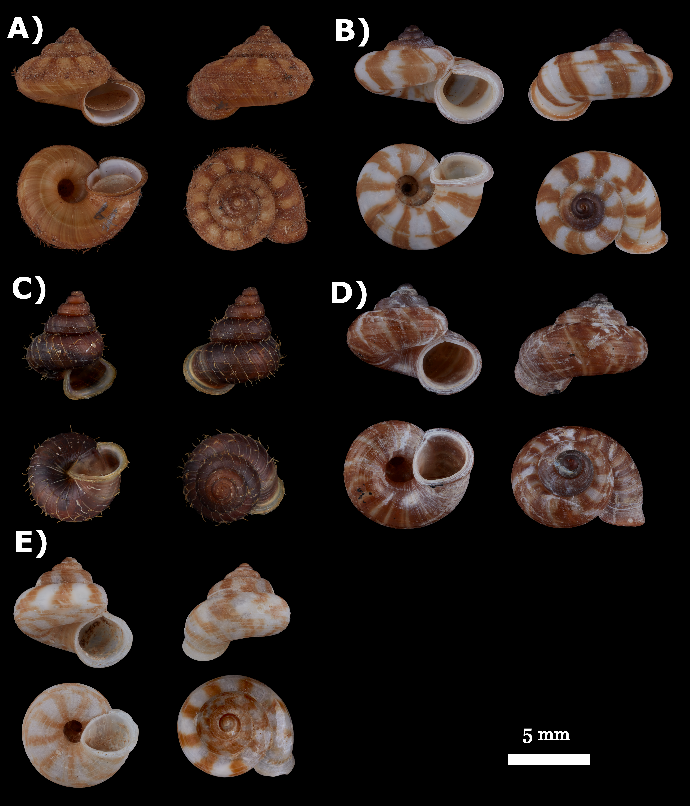
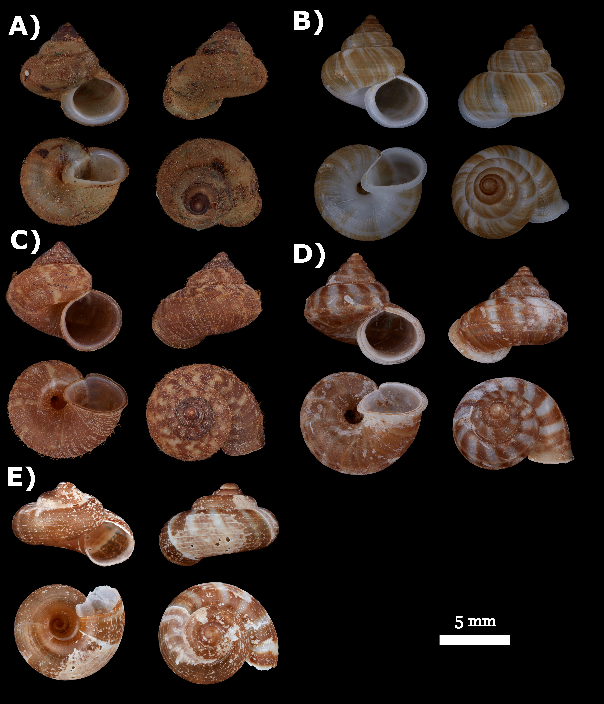
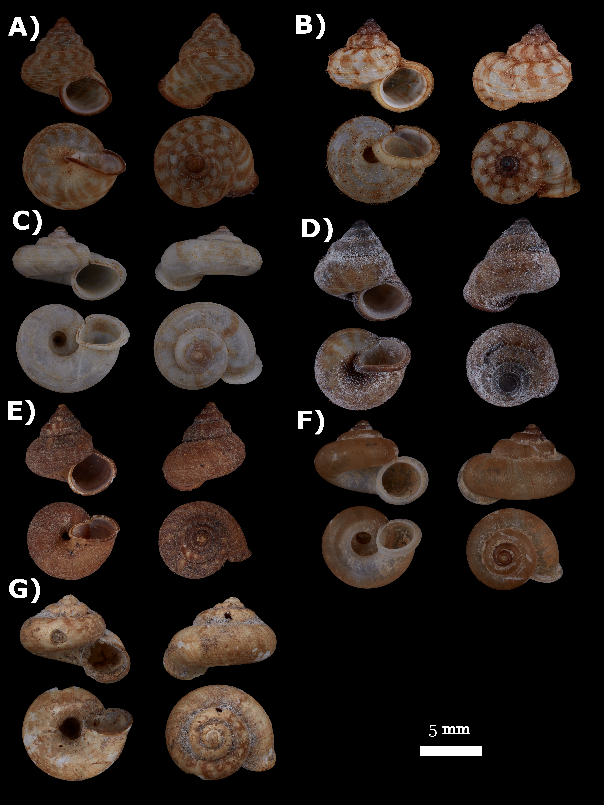
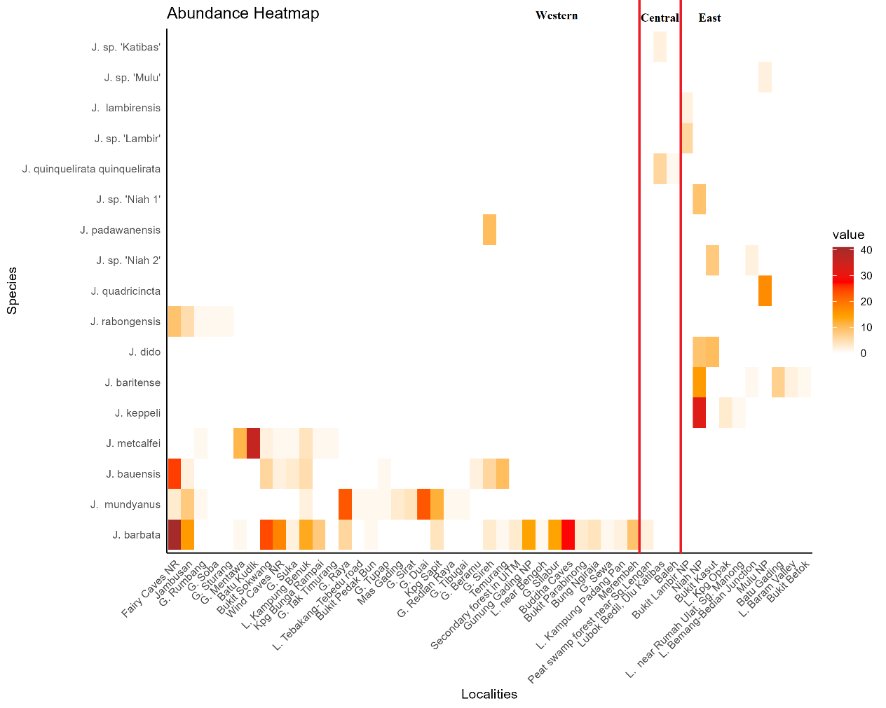
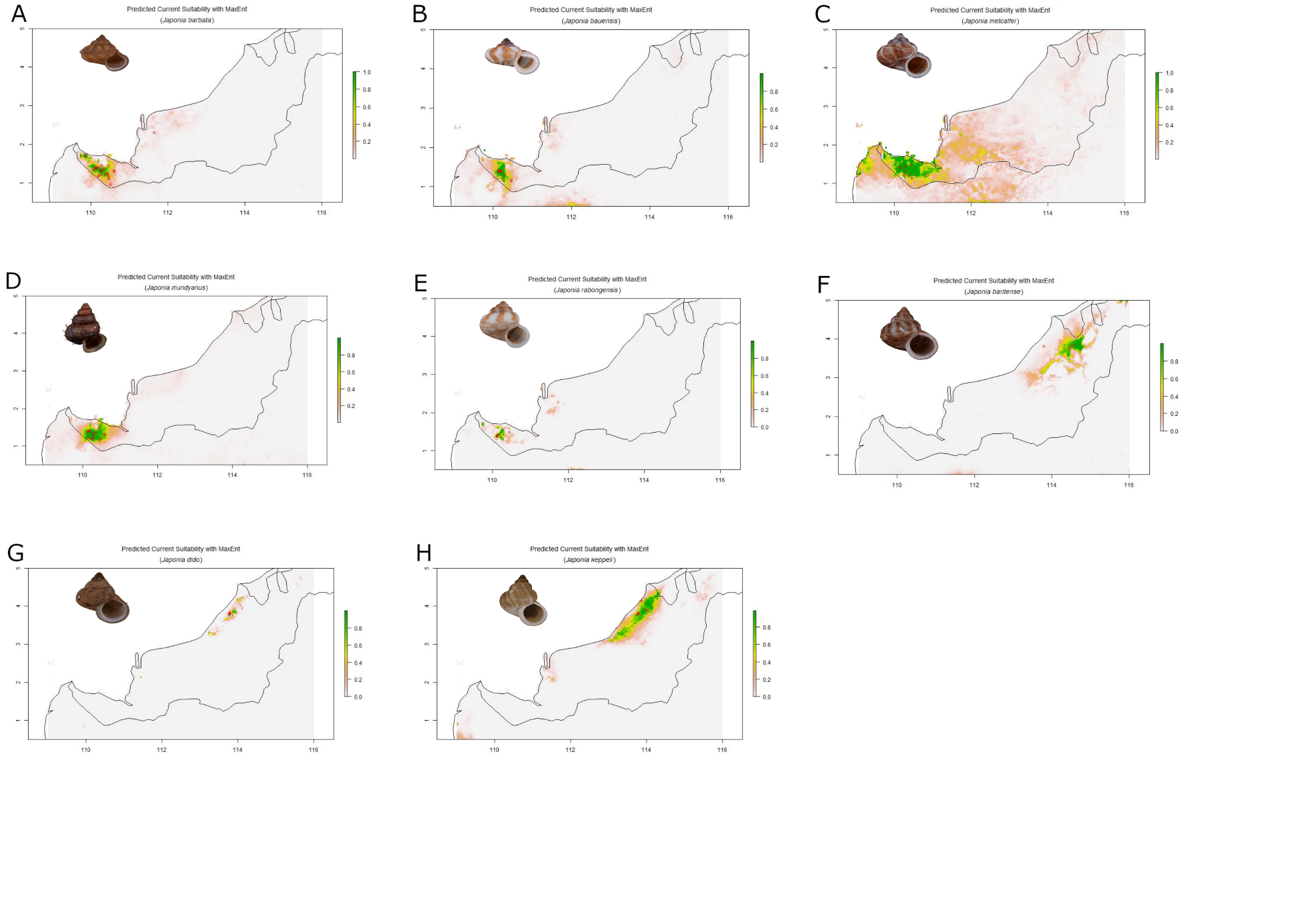
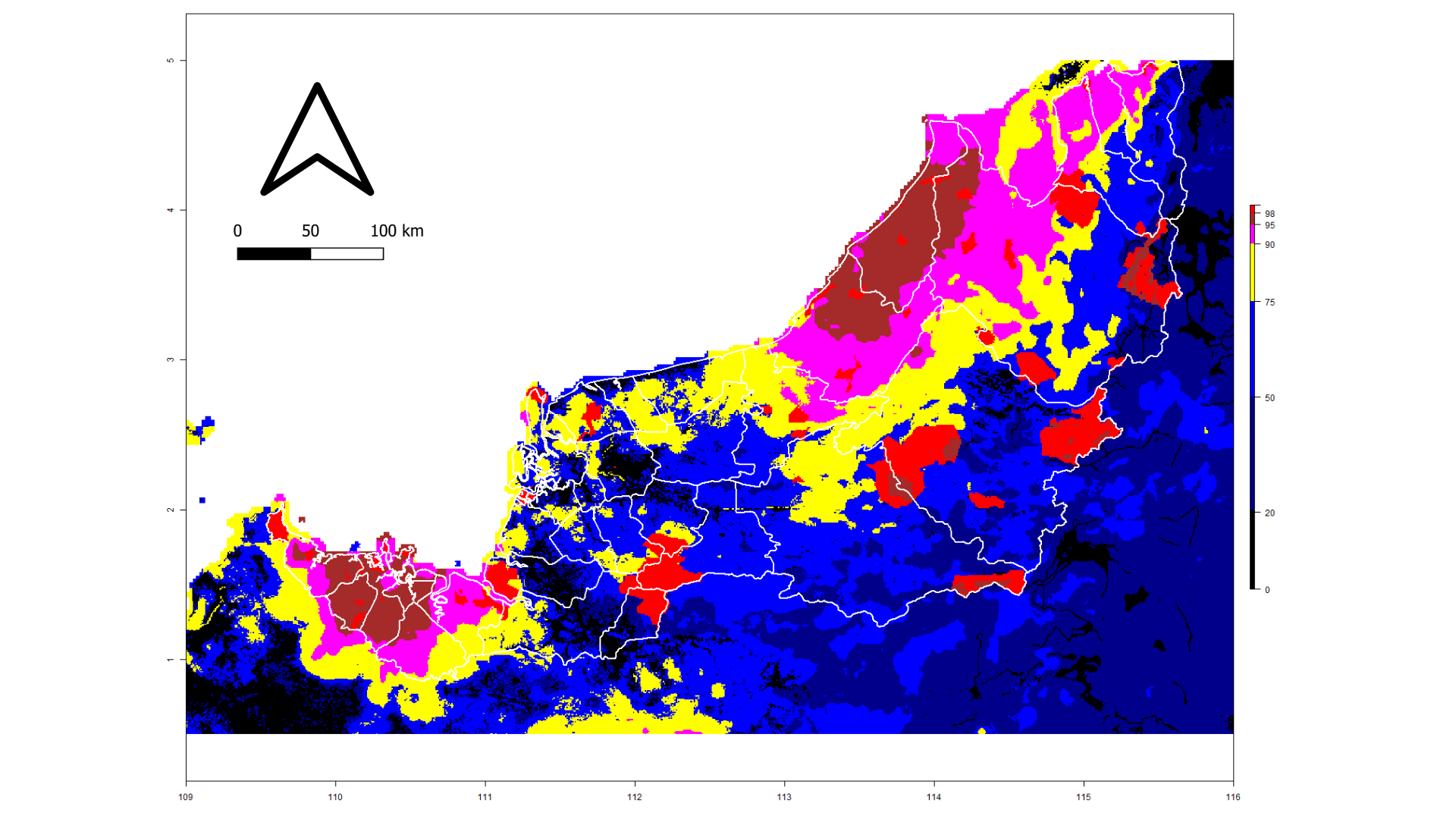
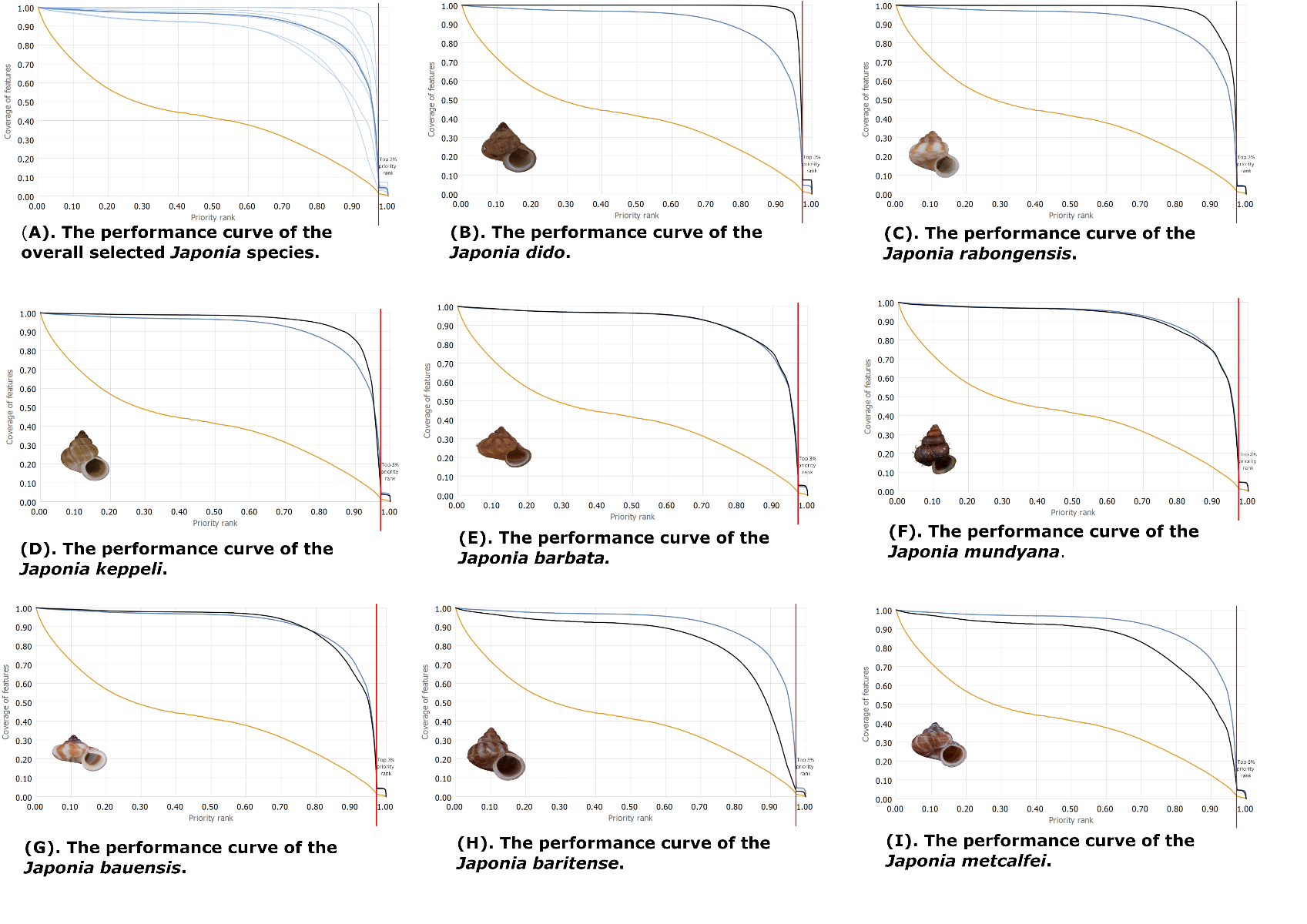
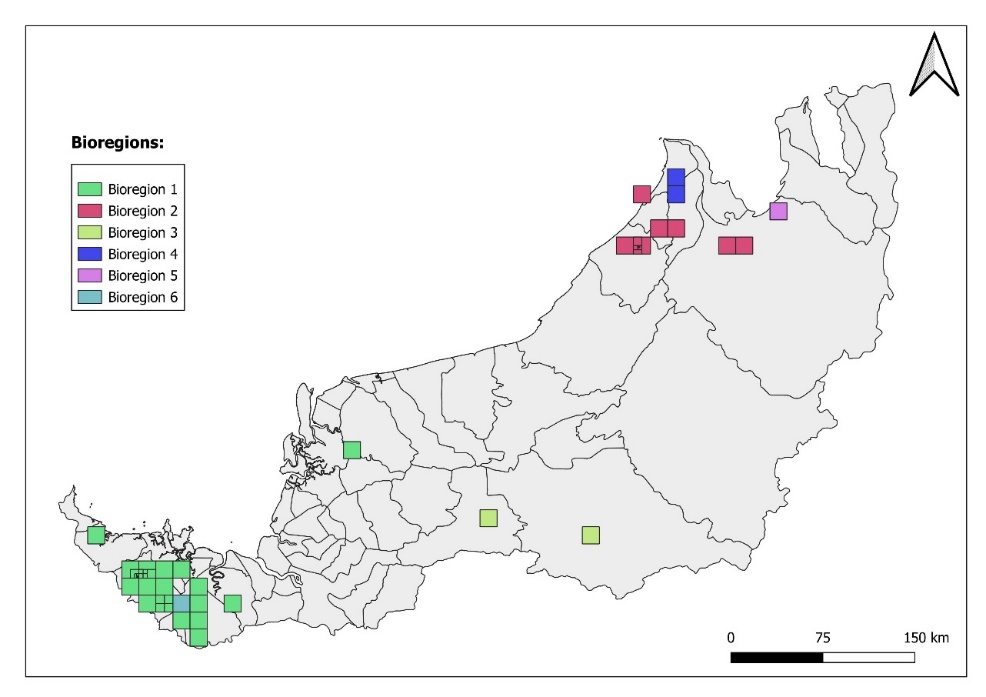
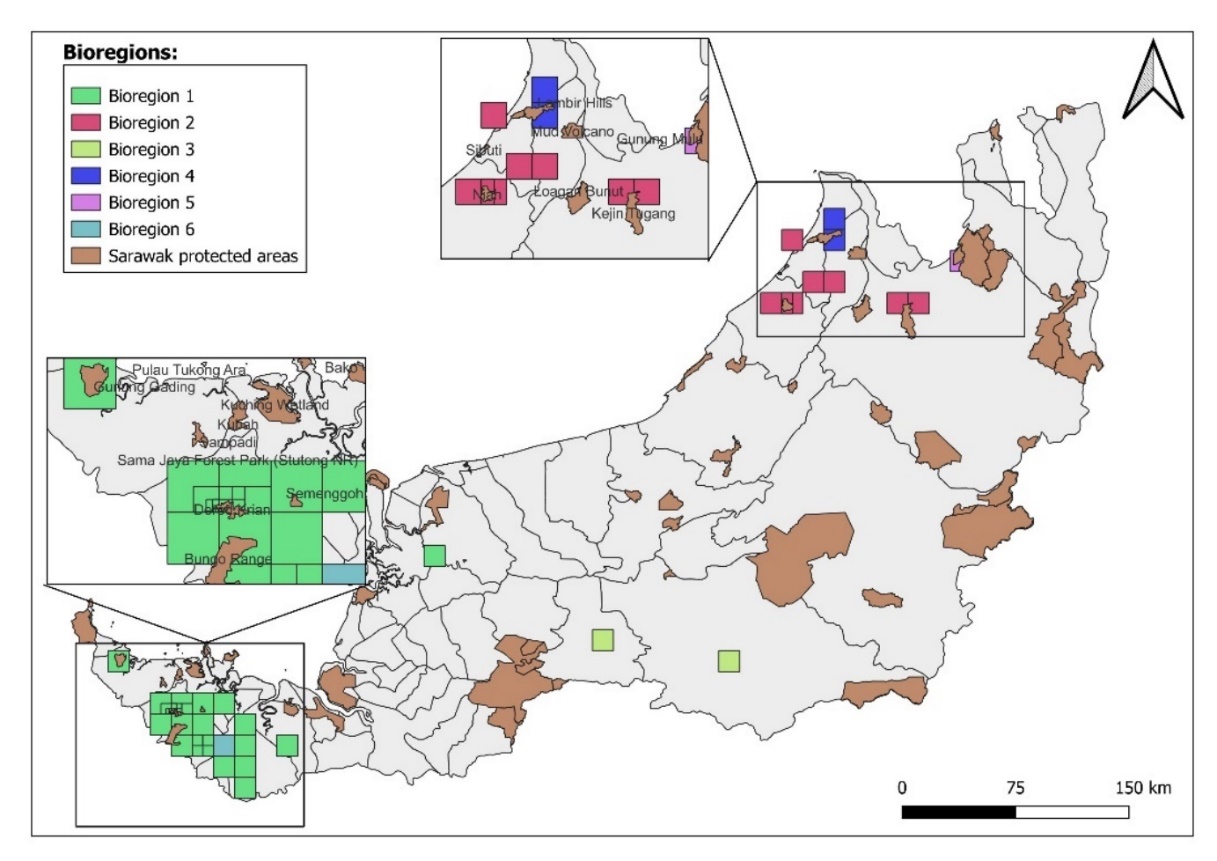
| Summary: | This study explores the diversity and distribution of Japonia species, a genus of terrestrial gastropods in Sarawak, Malaysia. Due to their limited distribution and specific habitat needs, Japonia species are highly sensitive to ecological changes. The study aimed to identify these diversity and distribution patterns and to predict habitat suitability for selected Japonia species using the Maximum Entropy algorithm based on bioclimatic data. Seventeen species were identified, categorised into widely distributed (J. barbata, J. bauensis, J. metcalfei), short-ranged (J. dido, J. keppeli, J. baritense), and endemic (J. lambirensis, J. hyalina, J. sp. 'Mulu'). Notably, Japonia barbata is abundant in the western region, J. quinquelirata quinquelirata in the central region, and J. keppeli in the eastern region. Key environmental factors influencing habitat suitability varied by species: precipitation during the driest quarter was crucial for J. barbata and J. bauensis, mean temperature in the driest quarter played a significant role for J. baritense, and precipitation during the wettest quarter was a determining factor for J. dido. Six bioregions were identified, highlighting species-rich areas. Conservation priority analysis identified Lundu, Bau, Kuching, Asajaya, and Samarahan (west); Tatau, Bintulu, Niah Suai, and Sibuti (east); and Lubok Antu, Song, and Kapit (central) have the high priority conservation value. Recommendations include expanding existing parks and reserves, establishing new protected areas to prevent endemic species loss, particularly Japonia padawanensis. This research provides valuable insights into Japonia distribution and proposes targeted conservation strategies to safeguard these ecologically significant organisms. |
|---|